Pricing Without Surprises – Your quoted price is inclusive of tariffs, duties, and overall shipping expenses.

DIRECT CNC MACHINING FACTORY IN CHINA
Custom CNC Milling Services
3-axis, 4-axis and 5-axis CNC milling for precision metal and plastic parts. From early prototypes to repeat manufacturing, we review your engineering drawings and help identify the right production approach.
Precision Milling for Your Design
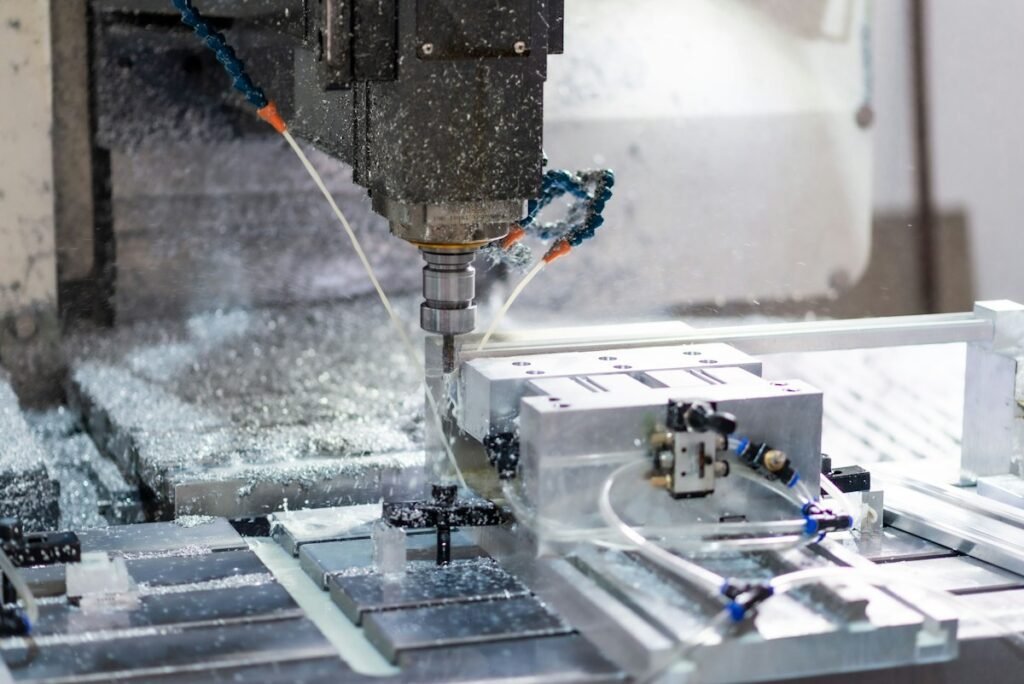
CNC milling removes material with rotating cutting tools to create flat faces, slots, pockets, holes, profiles and complex contours. Tool access, material, workholding, dimensional requirements and quantity determine the machining strategy.
Our own factory reviews manufacturability and key features before quotation.
Our CNC Milling Capabilities
3-Axis CNC Milling: Suitable for prismatic components, slots, holes, pockets and flat faces.
4-Axis CNC Milling: Rotary positioning for multi-face features and suitable cylindrical components.
5-Axis CNC Milling: Improved tool access to angled surfaces and complex geometries, potentially reducing re-fixturing.
Custom Parts: Housings, fixtures, brackets, precision mechanical parts and prototypes, subject to drawing review.
Prototypes & Repeat Production
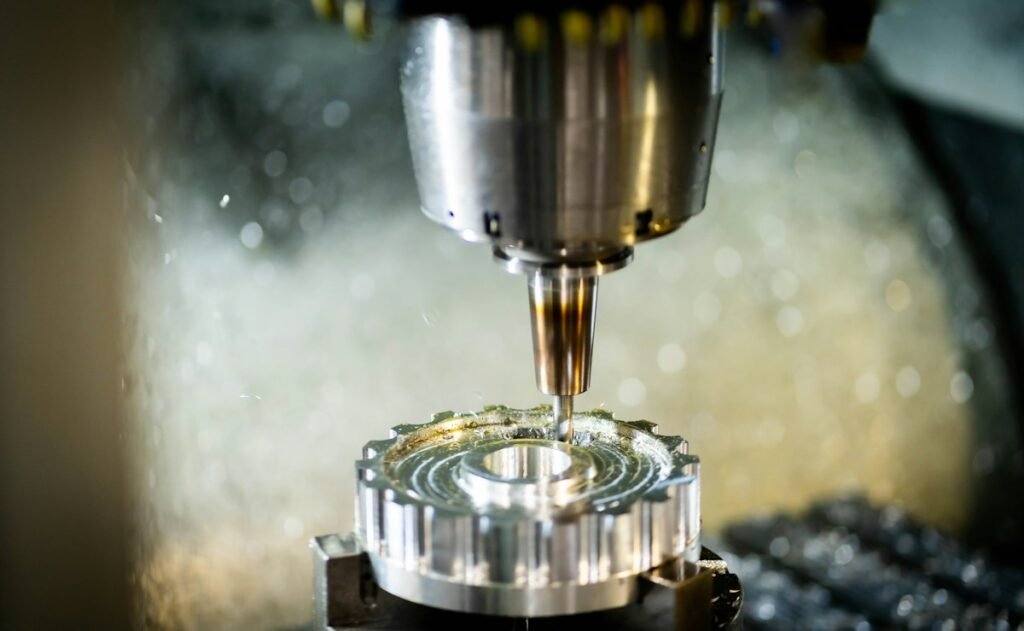
Prototype machining helps evaluate assembly, fit and function. For repeat production, stable setups, dimensional inspection and clear drawing revisions become increasingly important.
Send your expected quantity, delivery destination and project schedule. We will assess feasibility and provide a project-specific quotation.
CNC Milling Materials
Common metals: Aluminum alloys, stainless steel, carbon steel, brass and copper. Material selection affects tool wear, thermal behavior, cost and finish.
Common engineering plastics: POM, ABS, nylon, PC and other suitable grades. Thermal expansion and workholding are important for dimensional stability.
These are examples of machinable materials, not a claim that every grade is stocked. Specify the exact material standard and temper in your RFQ.
Surface Finishes & Post-Processing
As-machined: Suitable for functional surfaces where visible tool marks are acceptable.
Deburring: Removes sharp edges and burrs from machined features.
Optional finishes to evaluate: Bead blasting, polishing, anodizing, plating and protective coatings, depending on the material and project.
Finishing availability, Ra requirements, color and coating thickness must be confirmed before quoting.
Machining Tolerances & Quality
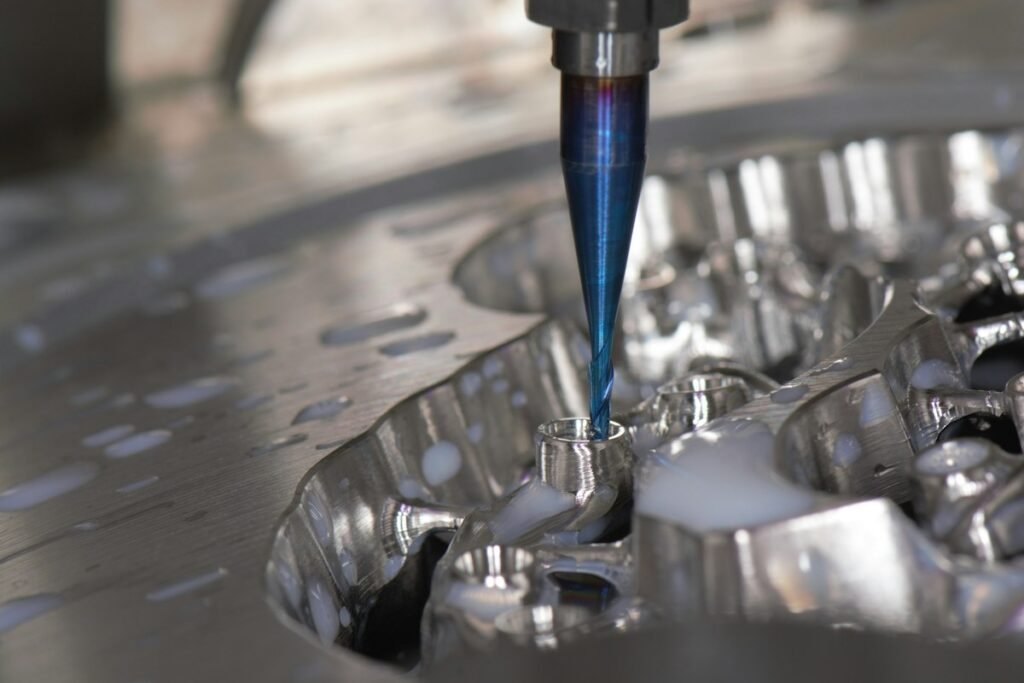
Precision: ±0.01 mm may be achievable for suitable CNC machined features; it is not a universal tolerance for every part or dimension.
Quality systems: ISO 9001 and IATF 16949 certifications as confirmed by Plus Minus Three.
Drawing requirements: Define datums, critical dimensions, GD&T, threads, surface roughness and inspection documentation requirements. The inspection plan is reviewed per order.
Design for Manufacturability
Internal corners: Allow appropriate corner radii because cylindrical cutters cannot create perfectly sharp inside corners.
Deep pockets: Long tools may deflect and increase cycle time.
Thin walls: Reduce vibration and deformation risks through thoughtful wall design.
Tolerances: Apply tight tolerances to function-critical features rather than every dimension.
Holes and threads: Specify diameter, depth, thread standard and access clearly.
Applications & Industries
CNC milled parts are widely used in automation equipment, industrial machinery, robotics, automotive systems, electronics, laboratory fixtures and product development. These are illustrative applications rather than unverified customer case studies.
How to Request a CNC Milling Quote
Step 1 — Submit drawings: Send STEP/IGES CAD data and a 2D PDF with critical dimensions.
Step 2 — Define requirements: Provide material grade, quantity, finish, inspection needs and delivery destination.
Step 3 — Engineering review: We review tooling access, geometry, tolerances and open questions.
Step 4 — Confirm production: Pricing, manufacturing route and inspection scope are agreed before production.
Frequently Asked Questions
Ready to Manufacture Your Part?
Share your engineering drawing and project details for a practical manufacturability review and quotation.